
 By
By Hip-Hop Is Politics
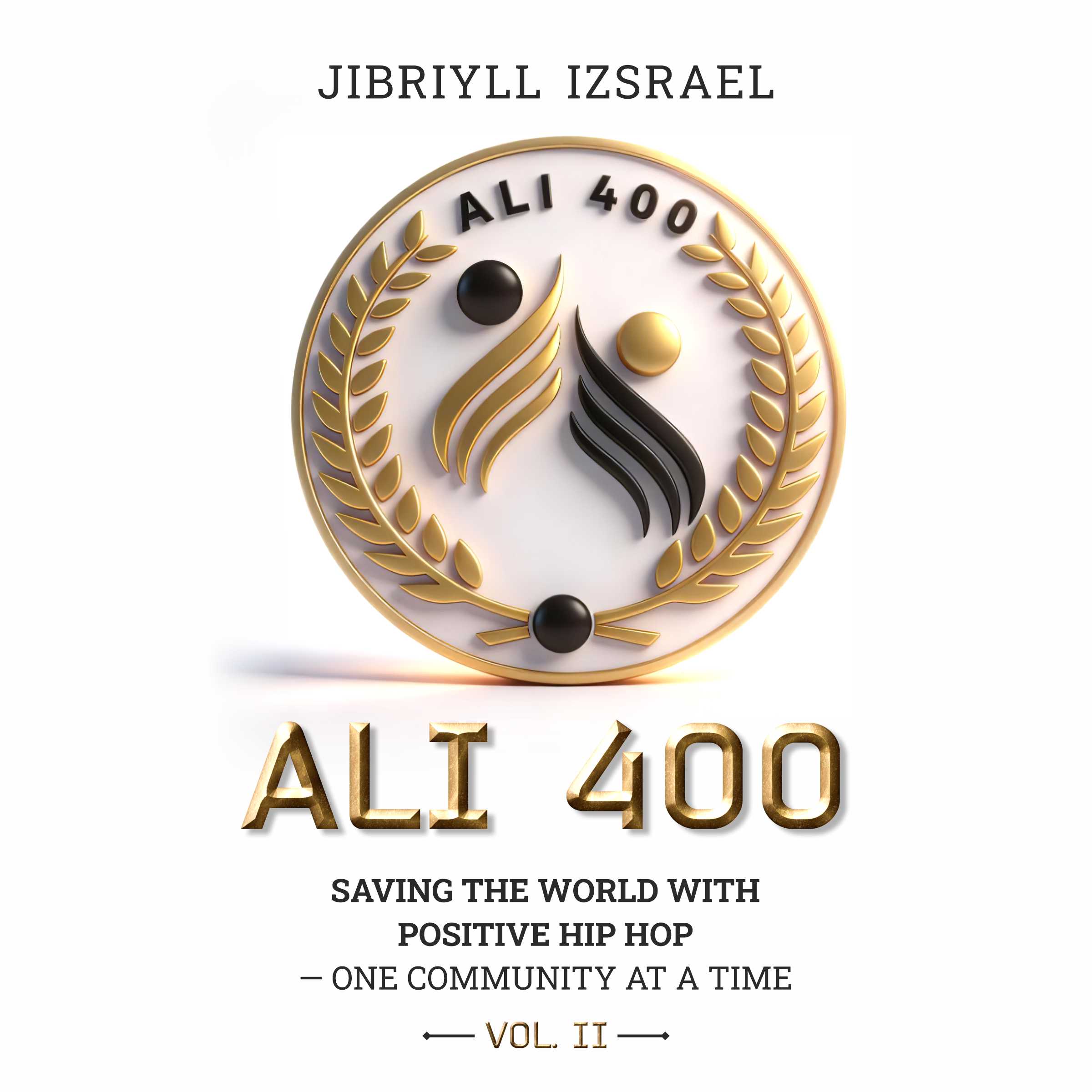
ALI 400 — Chapter 17
There was a time when Hip-Hop was publicly condemned across the political spectrum.
It was portrayed not as expression, but as pathology—evidence of moral decay, cultural failure, and social breakdown.
Its language was deemed dangerous.
Its messengers were treated as threats.
Its existence was framed as something to be corrected or erased.
This consensus did not arise from misunderstanding.
It arose from recognition.
Hip-Hop was never dangerous because of profanity or posture.
It was dangerous because it spoke plainly.
It narrated realities that institutions preferred remain obscured.
It reported from the margins without asking permission.
It described conditions produced by policy, neglect, and structural violence—and did so in a language that traveled faster than official explanation.
Hip-Hop did what politics often refuses to do:
It told the truth before it was acceptable.
From Condemnation to Recognition
As time passed, condemnation gave way to selective embrace.
Cultural figures once vilified became celebrated.
Lyrics once denounced as unfit for society were reinterpreted as “social commentary.”
Politicians who grew up alongside Hip-Hop began to publicly identify with it—
not as rebellion,
but as reflection.
This shift is often mistaken for progress.
It is better understood as inevitability.
Hip-Hop did not change to enter politics.
Politics aged into Hip-Hop.
A generation raised within the culture eventually inherited formal power.
What was once external critique became internal reference.
The same music once dismissed as corrosive was now described as reportage—accounts of lived experience, social fracture, and economic abandonment.
Recognition Without Accountability
This recognition, however, came without accountability.
Too often, political engagement with Hip-Hop stops at symbolism.
Artists are praised for “telling stories,” while the conditions those stories describe remain intact.
Culture is celebrated—but not consulted.
Narrative is consumed—but not acted upon.
This is the central misunderstanding.
Hip-Hop is not commentary on politics.
Hip-Hop is politics.
Language Under Pressure
Hip-Hop is political because it is language deployed under pressure.
It is political because it names power where power denies itself.
It is political because it shapes how millions understand reality before policy ever reaches them.
Hip-Hop functions as an unofficial press corps for communities denied access to formal platforms.
It reports on:
policing,
housing,
labor,
incarceration,
survival—
not through statistics,
but through testimony.
Where mainstream discourse abstracts suffering,
Hip-Hop personalizes it.
This is why it has always been treated as a threat.
Language is the first battleground of power.
Those who control description
control decision.
Hip-Hop does not wait for permission to describe the world.
It does not sanitize conflict to preserve civility.
It forces uncomfortable realities into public consciousness and dares society to respond.
This is political action.
Containment Through Commodification
Yet Hip-Hop’s political capacity is often neutralized through commodification.
When culture is stripped of consequence and reduced to entertainment, its critical edge is dulled.
Stories are consumed without responsibility.
Anger is marketed without resolution.
Resistance becomes aesthetic.
This is not liberation.
It is containment.
The Discipline of Political Power
The task before this generation is not to prove Hip-Hop’s political relevance.
History has already settled that question.
The task is to discipline its political power.
Undisciplined political expression exhausts itself.
Disciplined political expression builds institutions.
Hip-Hop’s next evolution requires moving:
beyond reaction toward construction,
beyond exposure toward organization,
beyond critique toward governance.
This does not mean abandoning truth-telling.
It means extending it.
Political maturity is not silence.
It is strategy.
From Mirror to Blueprint
Hip-Hop must no longer be satisfied with being a mirror.
It must become a blueprint.
It must translate:
insight into infrastructure,
emotion into education,
narrative into policy literacy.
This is where alignment matters.
When artists understand themselves as political actors—
not mascots,
not entertainers,
not mouthpieces—
the relationship between culture and governance shifts.
Communities stop being represented symbolically.
They begin to participate substantively.
The Moment of Decision
Hip-Hop already possesses the reach, trust, and language required to mobilize millions.
What it has often lacked is coordinated direction insulated from co-optation.
This is no longer optional.
A generation fluent in Hip-Hop now occupies every sector of society:
media,
business,
education,
government.
The question is not whether Hip-Hop belongs in politics.
The question is whether politics can survive without it.
Final Declaration
From this point forward, Hip-Hop must reject passive admiration from power.
It must demand structural engagement.
Not invitations—but influence.
Not proximity—but participation.
Not praise—but policy.
Because Hip-Hop has never merely reflected society.
It has been reporting on it, warning it, and preparing it.
And now—
it must help rebuild it.
Support the Work
If this chapter resonated with you, consider supporting the African American Union.
Your support helps expand education, economic cooperation, and cultural development within our community.• Become a member
• Support the Union store
• Share this chapter
• Make a contribution
All net proceeds from the Sovereign Trilogy are dedicated to helping seed the African American Sovereign Wealth Fund, an initiative of the African American Union designed to strengthen economic cooperation and institution-building for future generations.
By supporting this work, readers help transform ideas into lasting infrastructure for our community.