
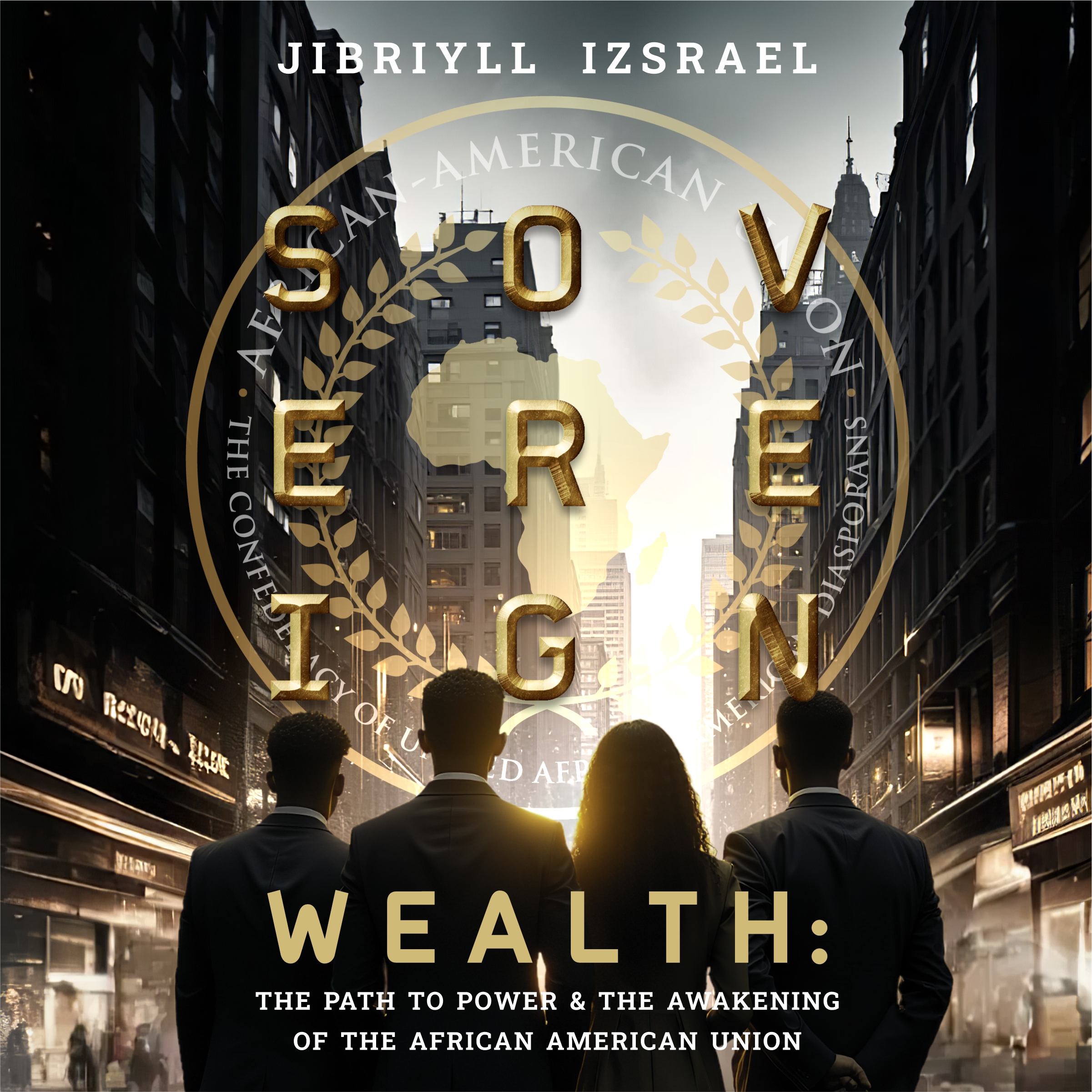
Sovereign Wealth: The Path to Power and the Awakening of the African American Union-Chapter 15
-
 By Jibriyll Izsrael
- 2026-03-22
International Alliances & Diasporic Diplomacy—Reclaiming Our Global Voice
Sovereign Wealth-Chapter 15
Chapter 15 advances the strategic development of international alliances, demonstrating how coordinated diasporic diplomacy and transnational partnerships restore global influence and reposition African Americans as active participants in shaping multipolar economic and cultural systems.
Africa is not just a continent—
it is our compass.
The diaspora is not scattered—
it is strategically stationed.
And our struggle is not isolated—
it is global.
A Nation Without Borders, Yet Infinite Reach
The African American struggle has always been global.
From the first enslaved Africans stolen from the continent, to the rise of the Garvey Movement, from the Pan-African Congresses to the presence of Malcolm and Maya in Ghana—our pain, our brilliance, and our pursuit of liberation have never been confined to U.S. soil.
Yet despite our global impact, we have long lacked an organized diplomatic presence:
a unified voice to speak for ourselves, build alliances with the international community, and shape global policy in alignment with our interests and values.
The African American Union will change that—permanently.
It will serve as our collective voice on the world stage, rooted in ancestral wisdom, political clarity, and a commitment to justice without borders.
Rebuilding Pan-African Unity Through Diplomacy
We are not a lone people.
We are a branch of a mighty global tree.
Africa, the Caribbean, South America, Europe, and beyond—the African world is vast, interconnected, and rich with shared struggle and shared triumph.
Our freedom will not be complete until we are:
-
connected in purpose
-
coordinated in action
-
and committed to one another’s advancement
across borders, across oceans, and across generations.
The AAU’s International Mission Will Include
-
Establishing Union Embassies and Diasporic Missions in key African, Caribbean, and Latin American nations to serve as diplomatic, cultural, and economic hubs for transnational collaboration
-
Building strategic alliances with African governments, continental unions, and Afro-descendant populations around the world, fostering solidarity and coordinated action across the global African diaspora
-
Forging trade, cultural exchange, and cooperative security agreements with Pan-African partners to ensure mutual development, cultural preservation, and collective resilience
-
Advocating at international bodies—including the United Nations, the African Union, and international courts—to defend the rights of African-descended people and influence global policy in alignment with our liberation goals
Strategic Goals of Diasporic Diplomacy
1. Global Recognition of the AAU
We must pursue global recognition of the African American Union as a legitimate voice for African Americans on the international stage.
This includes:
-
Seeking formal standing and engagement within international forums dedicated to people of African descent
-
Utilizing international human-rights frameworks to present the African American Union as a lawful cultural nation with the right to self-organization, autonomy, and global engagement
-
Drawing from historical precedents in international political recognition to strengthen claims of legitimacy, continuity, and representation
The goal is not symbolic visibility.
It is diplomatic presence.
2. African Treaty of Return and Dual Citizenship
We must negotiate formal Right of Return pathways with multiple African states, affirming the spiritual and historical ties between African Americans and the continent.
This includes:
-
Promoting dual citizenship and land-investment opportunities with nations such as Ghana, Senegal, Nigeria, and South Africa
-
Encouraging long-term resettlement, entrepreneurship, and cultural exchange
-
Establishing Diaspora Visa Programs to facilitate travel, pilgrimage, business development, and educational exchange across the African world
Return is not merely physical.
It is political.
It is cultural.
It is civilizational.
3. Pan-African Defense and Security Cooperation
The African world must not remain vulnerable, disconnected, or reactive.
We must develop cooperative security frameworks focused on:
-
community self-defense
-
cybersecurity
-
emergency response
-
institutional protection
-
and shared preparedness
This means building collaborative training networks and mutual support structures with African and diasporic partners to protect African communities worldwide.
It also means standing together against:
-
transnational exploitation
-
resource theft
-
destabilization
-
and anti-African violence in all its forms
Security must be understood as part of sovereignty.
And sovereignty must be defended collectively.
4. Establishment of the First African American Diaspora Economic Bloc
We must facilitate the creation of an Afro-Global Economic Union by linking African American-owned:
-
banks
-
tech companies
-
agricultural cooperatives
-
manufacturers
-
and investment networks
into a coordinated global trade system.
This requires building critical infrastructure, including:
-
shipping lanes
-
trade hubs
-
diaspora-oriented financial instruments
-
and digital systems that support intra-diasporic commerce
We must also organize annual Pan-African Trade Summits, rotating among member states to:
-
showcase innovation
-
build partnerships
-
and deepen economic interdependence across the global African community
This is not just trade.
It is economic alignment at a civilizational scale.
5. Global Cultural Alliance
Diplomacy is not only political.
It is cultural.
We must create a shared Pan-African Media Exchange that distributes Black-owned content, documentaries, journalism, and cultural programming across the diaspora.
We must launch a global broadcasting network that carries the Union’s media voice into homes across continents.
We must also celebrate a Global Day of African Unity—an international observance uniting African people in ceremony, storytelling, economic support, and ancestral tribute.
And we must forge an Intercontinental Council of Elders:
a body of spiritual and cultural leaders from each major region advising on cultural policy, ritual standards, and ethical diplomacy.
Culture is not secondary to diplomacy.
It is one of its deepest instruments.
Conclusion: From Powerlessness to Passport
We are not just survivors of the Transatlantic Slave Trade—
we are its answer.
The African American Union will not ask the world for sympathy.
We will:
-
demand our seat
-
fund our embassies
-
define our values
-
and stand shoulder to shoulder with sovereign African nations and global freedom fighters
Our ancestors did not die nameless in the Atlantic for us to remain voiceless in the world.
This is our time:
to speak,
to lead,
and to return.
Not as beggars—
but as builders.
Not as tokens—
but as a people conscious of our power.
The world will no longer ask,
“Who speaks for the African American?”
They will know.
The African American Union has arrived.
Support the Work
If this chapter resonated with you, consider supporting the African American Union.
Your support helps expand education, economic cooperation, and cultural development within our community.• Become a member
• Support the Union store
• Share this chapter
• Make a contribution
All net proceeds from the Sovereign Trilogy are dedicated to helping seed the African American Sovereign Wealth Fund, an initiative of the African American Union designed to strengthen economic cooperation and institution-building for future generations.
By supporting this work, readers help transform ideas into lasting infrastructure for our community.