You can kill a leader.
But you cannot kill an institution.
Institutions are built upon ideas, and ideas do not die.
Institutions do not shift when the headlines change.
They outlive elections, social trends, and even revolutions. They hold steady while the world changes around them, carrying the dreams of a people from one era to the next.
That is why every powerful group builds them as if life depends upon it.
Because it does.
Now ask yourself:
Where are ours?
Where are the African American institutions that our great-grandchildren will inherit, walk into, and own as their birthright?
Where are the schools that refuse to erase our history—the ones that teach our children their genius long before they learn of their oppression?
Where are the hospitals that see us as sacred, not suspicious?
Where are the banks that fund our dreams without discrimination?
Where are the African American tech labs that build our future, the think tanks that shape our policy, the studios that tell our stories, the factories that make our goods, and the farms that feed our families?
The truth is painful:
We have been building movements, not machines.
And movements, while powerful, rise and fall with the tides of politics and passion.
It is time to build the machinery of institutions that will allow us to stand firm through every storm.
From Charisma to Concrete We have had Malcolm.
They gave us vision.
They gave us blueprint.
But we cannot continue waiting for the next messiah.
Movements are emotional. They are often filled with passion, urgency, and righteous fire—but they can also be unfocused.
Institutions are intentional.
Movements can mobilize, fill the streets, and ignite the masses.
But institutions organize.
Institutions make laws.
Our enemies build systems while we build celebrities.
They build banks and trade unions.
This stops now.
The African American community must shift its focus from inspiration to infrastructure.
We need:
This is how we build something that no bullet, no smear campaign, and no wave of propaganda can destroy.
This is the work of our generation—until African American freedom is no longer a dream, but a reality sustained by institutions that we build, own, and control.
The Six African American Institutions We Must Build—and Own Forever 1. Independent Education Systems We need more than African American schools.
We need African American curricula, campuses, and credentialing systems.
Education is not just about where we learn.
A single teacher in a broken system can only do so much.
What our people need is an entire educational ecosystem—one that teaches our children to see themselves as descendants of royalty, builders and innovators, healers and revolutionaries, with a distinct destiny not only to free themselves, but to help liberate the world.
Here is how we begin:
Establish Afrocentric K–12 and homeschool networks that teach African history, literature, science, and heroes from the ground up
Launch African American-owned online universities that are accessible, affordable, and aligned with our values
Train teachers to teach truth, not whitewashed history
Create STEM, finance, and agricultural academies for African American youth
Offer trade schools tied to community-owned businesses so young people graduate with practical skills that translate into jobs, ownership, and generational wealth
Let our children graduate fluent in freedom, not merely facts.
2. Financial Infrastructure No more begging banks.
We must own the vaults.
This means:
Expanding African American-owned credit unions and cooperative banks that prioritize our communities
Launching venture capital firms for African American entrepreneurs so our best ideas do not die for lack of funding
Funding national African American grant foundations that provide seed capital to businesses, creative projects, and community initiatives
Establishing African American fintech and digital finance platforms with Pan-African utility
Economic freedom is impossible without control of monetary power.
Until we build these financial engines, we will remain dependent upon the monetary policies of other people.
3. Health and Wellness Institutions Our people are dying from preventable illnesses and untreated trauma.
The current system profits from our sickness, but rarely invests in our healing.
We must take control of our well-being.
We need:
African American-owned hospitals, urgent care centers, and birthing clinics that treat us with dignity
Community health networks with African American doctors, therapists, doulas, nutritionists, and holistic practitioners
Mental health sanctuaries rooted in cultural understanding and ancestral wisdom
Afrocentric health insurance cooperatives that pool resources to provide affordable, quality care
Health is not a service.
It is a birthright.
Until we treat it that way, we will remain at the mercy of others.
4. Cultural Control Centers He who controls your culture controls your consciousness.
For centuries, others have distorted our image, silenced our voices, and profited from our creativity.
It is time to take that control back.
We must build our own:
film studios
streaming platforms
publishing houses
social platforms
archives
museums
heritage centers
We must protect and digitize our historical archives and oral traditions to preserve the wisdom of our ancestors.
We must fund visual artists, writers, musicians, and historians so that the creative geniuses among us do not merely survive—they shape the culture of the future.
We must create national museums and heritage centers, both physical and virtual, that celebrate our journey, our triumphs, and our contributions to the world.
We must stop leasing our image to those who seek to diminish it.
It is time to own:
This is how we reclaim our story, our legacy, and our future.
5. Legal and Security Institutions For centuries, the legal system has been used against us.
It is time we turn it into a shield—and a sword.
We must:
Train and fund an army of African American lawyers, paralegals, and constitutional scholars
Create legal defense funds to support civil rights cases, protect protesters, and fight wrongful convictions and discriminatory policies
Establish neighborhood patrols and emergency response teams to help protect our communities during crises
Develop security companies, firearm safety programs, and self-defense schools that empower our people to protect themselves responsibly and lawfully
We must protect ourselves by every legal means necessary.
No community can truly thrive without safety, security, and justice on its own terms.
6. International Hubs The African American Union must have outposts around the world, just as every other powerful diaspora does.
We are not local.
We are global African power in motion.
We must:
Create cultural and trade centers in African and Caribbean cities
Form embassies of African American thought and innovation where ideas are incubated and partnerships are forged
Launch African American think tanks with global policy influence
Host Pan-African summits that set our agenda rather than waiting for others to define it for us
We have the talent, the resources, and the history to lead on the global stage.
Now we must build the infrastructure.
The Blueprint: How to Start Building Now Choose One Sector Begin where your passion and purpose meet.
Focus your energy on a single sector—health, finance, education, security, or culture.
Choose the one that resonates most deeply with your vision and lived experience.
Clarity sharpens strategy.
Form a Local Coalition You do not need hundreds to begin.
You need a committed circle of five to ten people who share your values and long-term vision.
Together, begin as a micro-institution:
a Saturday school that teaches real history
a cooperative that grows and distributes food
a community clinic rooted in cultural care
a legal aid circle that defends rights
Start small.
But build seriously.
Secure Land, Capital, or Code Every lasting movement needs territory.
That may mean:
Whether it is soil, money, or software, we must claim and control what we build upon.
Ownership matters.
Document the Model Treat your work like a prototype for the future.
Develop systems, protocols, and handbooks so that your local model can be studied, adapted, and replicated by others nationwide.
Think not merely like a founder, but like an architect.
Design for scale.
Connect to the Union Network No effort exists in isolation.
Once your local initiative is stable, connect it to the wider African American Union network.
This creates a living web of sovereignty—a decentralized, self-sustaining ecosystem of African American-led institutions working in sync.
Together, we build the future we have been waiting for.
Our Ancestors Built With Nothing—What Is Our Excuse? They built schools while enslaved.
They created anyway.
even when the system was designed for them to fail.
Now we have more.
More money.
even if imperfect, still more than they had.
So the question is not whether this can be done.
The question is:
What are we waiting for?
Institutions Are Immortality When you build an institution, you write your name into eternity.
It does not matter whether they ever know your face.
They will step into your building without knowing who laid the first brick.
They will benefit from your sacrifice, whether they speak your name or not.
Legacy is not about recognition.
It is about impact.
They will live inside a world you helped make possible.
And that is eternal.
This is how we break the cycle:
not with slogans,
Movements wake people up.
But it is institutions that keep a people focused.
If we want the African American Union to stand strong for more than 100 years, we must build with 500 years in mind.
Think beyond the moment.
Let us outlive oppression by outbuilding it—
Support the Work
• Become a member
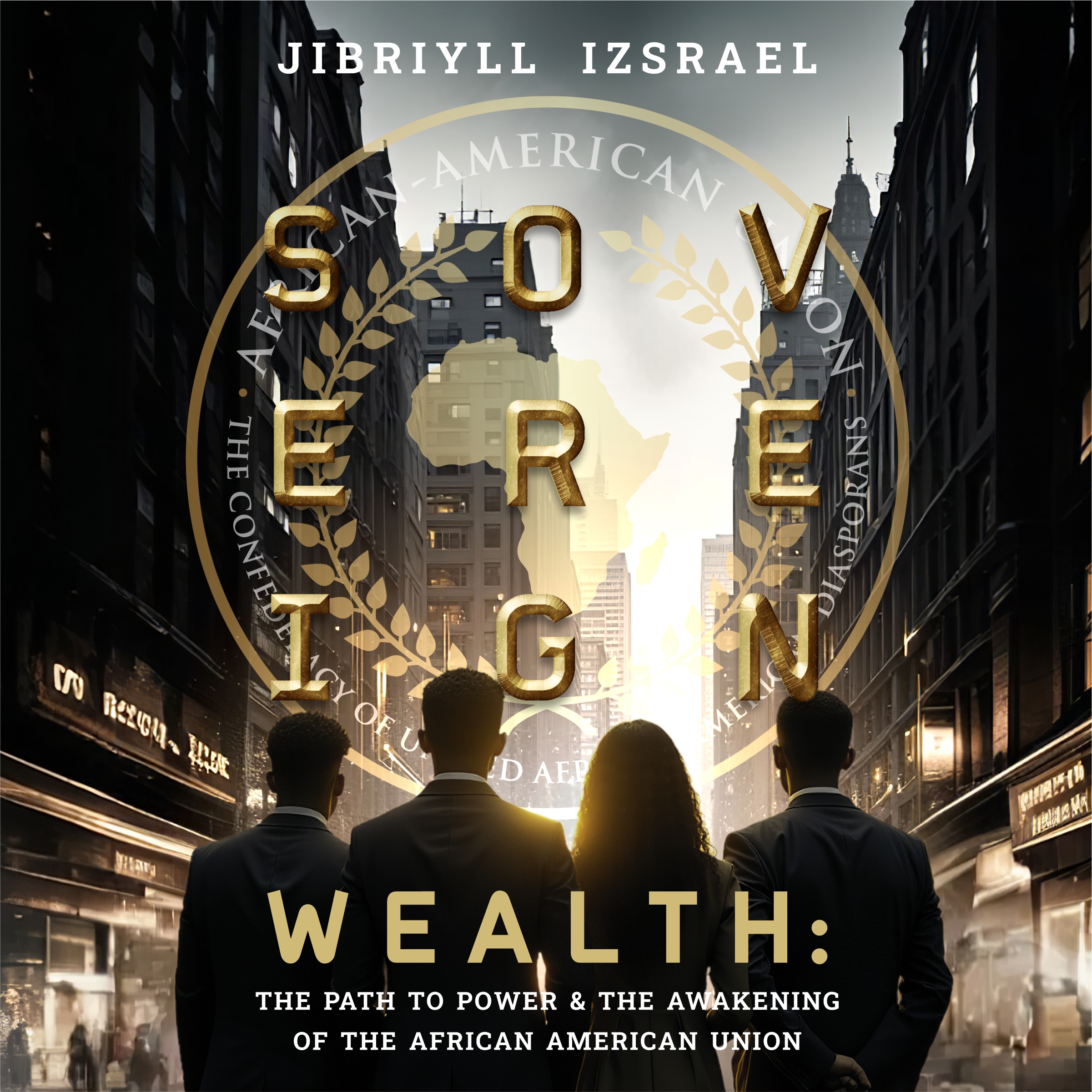
All net proceeds from the Sovereign Trilogy are dedicated to helping seed the African American Sovereign Wealth Fund , an initiative of the African American Union designed to strengthen economic cooperation and institution-building for future generations.
By supporting this work, readers help transform ideas into lasting infrastructure for our community.

 By Jibriyll Izsrael