
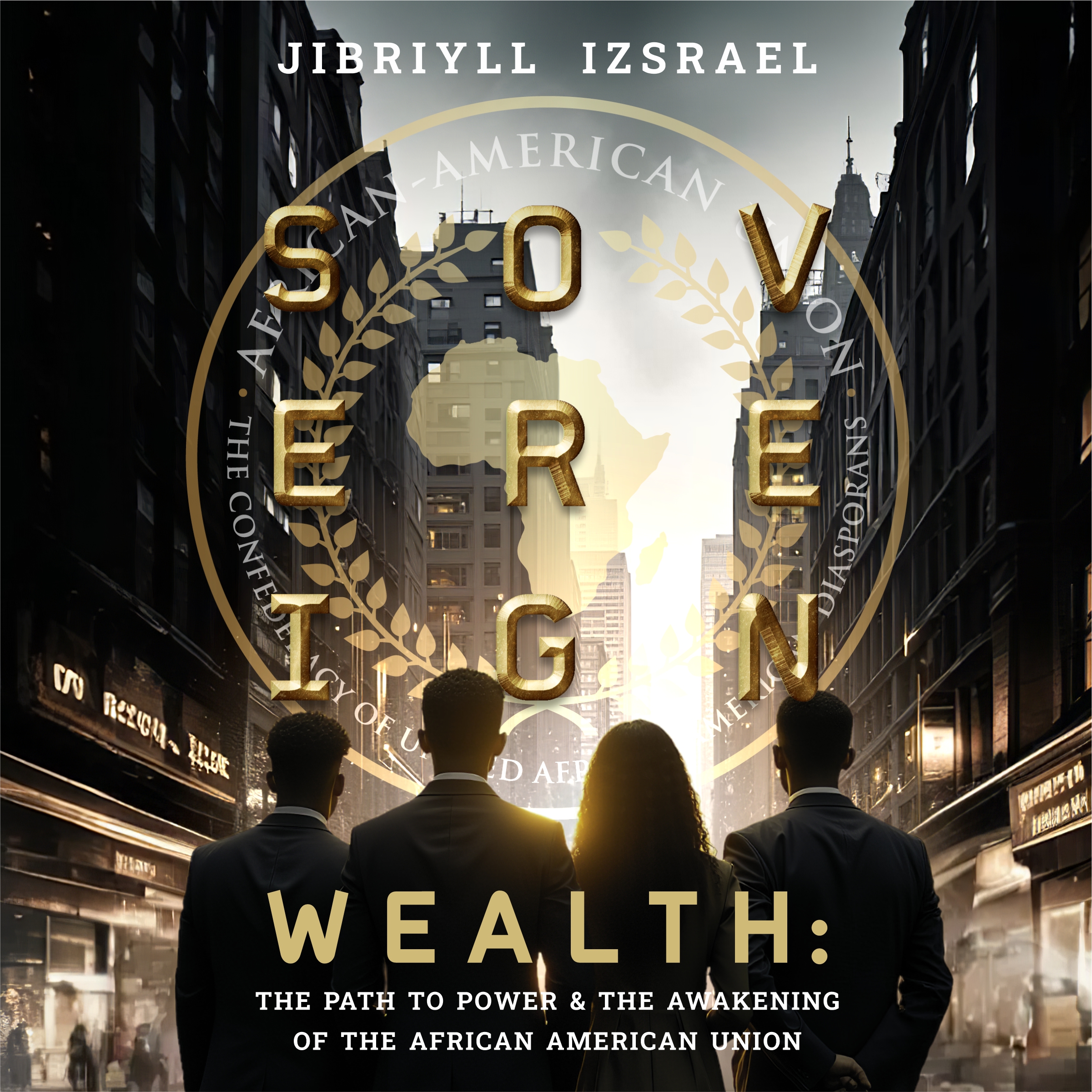
Sovereign Wealth: The Path to Power and the Awakening of the African American Union-Chapter 7
-
 By Jibriyll Izsrael
- 2026-03-21
Shield the People—African American Readiness, Self-Defense, and Strategic Security
Sovereign Wealth-Chapter 7
This chapter addresses lawful self-defense, emergency preparedness, and community protection.
All strategies described herein operate within constitutional boundaries and emphasize training, responsibility, and discipline—not vigilantism, chaos, or unlawful conduct.
Security is not aggression.
It is stewardship.
We cannot speak of sovereignty without establishing security within our communities.
Not in a nation built on gunpowder and genocide.
Not on stolen land, where rules were written in blood and rewritten in racist laws.
For African Americans, this is not theoretical.
It is lived history.
From slave patrols to modern policing, we have been disarmed first and protected last. Our safety has been compromised not by chance, but systematically and by design.
We have lived the consequences.
Our communities are left vulnerable.
Our schools and churches go unguarded.
Our elders and children are exposed to senseless gun violence, drug trafficking, prostitution, and robbery.
And when harm comes, the response is often delayed, distorted, or denied altogether.
We are told to wait, to plead, to protest—while others are granted the full protection of the state.
The truth is simple:
No defense—no freedom.
Security is not about fear, paranoia, or aggression.
It is about readiness.
It is about assurance.
It is about making sure that when the time comes, our people are not left unprotected.
Security must be rooted in integrity, discipline, care, and community control—not reaction, but uncompromising intention.
If the African American Union is to rise, it must rise guarded—not in fear, but in formation.
This means building security structures from the ground up:
-
community defense networks
-
de-escalation teams
-
emergency response systems
-
cyber protections
-
legal defense funds
-
and safety protocols designed by us, for us
Sovereignty comes from having the power to secure what you build.
We must create a firewall of protection around our future.
We cannot afford to outsource our safety.
Freedom demands the security of structure, and that is the foundation of true sovereignty.
Freedom Has Always Been Fought For—Never Gifted
Freedom has never arrived wrapped in generosity.
It has always been claimed through struggle, sacrifice, and resistance.
Our ancestors fought on every battlefield—from the Haitian Revolution to the American Civil War, from World War I to World War II—often laying down their lives for freedoms they were denied at home.
They did not fight because they were free.
They fought because they believed we could be.
The Black Panthers were not terrorists.
They were tacticians, strategists, and protectors.
They patrolled their communities, monitored law enforcement, and stood between their people and state violence long before cell phone videos forced the world to see what we have always known.
They also organized breakfast programs, health clinics, and education initiatives.
Yet the government called them dangerous for daring to defend African American life.
Malcolm X did not preach violence.
He preached preparedness.
He taught us that peace must be protected, and that dignity must be defended.
He reminded us that turning the other cheek is a choice, not a requirement.
His message was not about aggression.
It was about refusing to be caught off guard and exploited.
And Tulsa?
Tulsa did not burn because we were armed.
It burned because our excellence, without adequate protection, became a target.
The Greenwood District—Black Wall Street—remains a symbol of self-determination, wealth, and African American excellence.
Let that sink in.
Freedom will not be handed to us.
It never has been handed to anyone.
It must be built, defended, and preserved.
We Are Done Being Unarmed Witnesses
Unarmed while being shot in our own homes.
Unarmed while being shot jogging through our own neighborhoods.
Unarmed while praying in places that should have been sanctuaries.
This is the reality we face as African Americans.
No other community in America is expected to remain this peaceful while suffering this much attack.
The demand for silence, stillness, and submission in the face of violence is not only unreasonable.
It is unjust.
We do not want war.
We are not seeking chaos.
But we will no longer allow ourselves to be prey.
That era is over.
The new generation must be well-trained, well-informed, and well-organized.
This is not about becoming aggressors.
It is about becoming protectors.
Not outlaws.
Not vigilantes.
But guardians of the people.
Security is not a threat to anyone’s peace.
It is what makes peace possible.
And we owe it to our ancestors, our children, and ourselves to ensure that the next time danger knocks, we are ready to answer.
What African American Security Looks Like in the 21st Century
1. Firearms Education—From Fear to Fluency
African American security begins with shifting the narrative around firearms from fear to fluency.
Responsible firearm ownership should no longer be taboo within our communities. It must be approached with seriousness, discipline, lawful training, and accountability.
Families should be educated on every aspect of firearm responsibility.
This includes:
-
safety protocols
-
proper storage practices
-
and the laws governing ownership and use in their respective jurisdictions
Proper knowledge of firearm safety and lawful use supports protection.
Ignorance, by contrast, leaves people vulnerable.
Tactical education should not be left solely to those outside our communities.
We must build trusted partnerships with African American-owned gun ranges, defense schools, and certified instructors who understand both our rights and our realities.
These spaces can offer workshops, hands-on education, and a foundation rooted in accountability and community care.
Above all, the focus must remain on self-discipline and strategic restraint.
Firearms training is not about bravado.
It is not about ego.
It is not about intimidation.
It is about protection, preparedness, and purpose.
We do not need thugs with guns.
We need guardians with goals—protectors who are clear-minded, trained, and rooted in a vision bigger than themselves.
2. African American Community Security Forces (AAU Freedom Corps)
Security must begin at home.
Community security forces are not about militarization.
They are about protection, vigilant presence, peacekeeping, and organized readiness on our terms.
That means forming neighborhood watch teams equipped not merely with awareness, but with real training in:
-
de-escalation
-
crisis management
-
emergency response
-
observation
-
and lawful coordination
These teams can serve as a first line of protection for sidewalks, schools, churches, local businesses, and public gatherings.
Too often, we are forced to rely on institutions that do not prioritize our people’s safety.
It is time we take responsibility for our children’s security into our own hands—with clarity, care, and coordination.
Building these forces also means responsibly navigating the relationship between community and state.
Establishing formal connections with local governments can help secure resources and avoid legal pitfalls, but this must never come at the cost of community autonomy.
We can engage the system without being controlled by it.
Training must be inclusive.
Women, elders, and youth all have a role to play.
Everyone should know the basics of safety, surveillance awareness, emergency response, and how to remain calm under pressure.
Security is not the job of a few.
It is the responsibility of the whole.
This is not a militia.
It is the African American Union Freedom Corps—the product of collective commitment to protecting what we build and who we love.
3. Emergency Readiness and Survival Skills
True security goes beyond defense.
It includes the ability to survive and support one another when systems fail.
Emergency readiness is not paranoia.
It is preparation.
Communities must be equipped to withstand crises—whether caused by natural disaster, negligence, infrastructure failure, or unrest.
Our community centers should be stocked with essential supplies, including:
-
emergency food
-
clean water
-
first aid kits
-
communication gear
-
backup power sources
-
and tools for basic repair
These hubs can become lifelines in moments of disruption or danger.
Preparedness must also include training.
Every neighborhood should practice for scenarios such as:
-
natural disasters
-
power outages
-
internet blackouts
-
communication failures
-
or periods of civil unrest
Waiting for help is not a plan.
Being the help is.
Survival skills should be taught to all ages:
-
first aid
-
CPR
-
map reading
-
home gardening
-
water purification
-
and how to stay connected when networks go down
These are not outdated skills.
They are life-saving pillars of knowledge in a fragile and highly dependent age.
Each household should also be equipped with:
-
a go-bag packed with essentials
-
a communication tree to stay in touch
-
and a family or block-wide meeting-point plan
Survival cannot depend on convenience.
Liberation means little if your community cannot survive a week without outside systems.
Independence starts with resilience.
4. Cyber Defense and Digital Security
In the 21st century, the fight for freedom is not only physical.
It is digital.
The battlefield is no longer only in the streets.
It is in servers, apps, algorithms, and the flow of data that shapes daily life.
Cyber defense is now community defense.
We must start by educating ourselves and our communities on the basics of digital protection.
This includes:
-
securing devices
-
safeguarding personal data
-
recognizing phishing and scams
-
and understanding how surveillance operates across platforms
Awareness is the first firewall.
Encouraging the use of:
-
encrypted messaging tools
-
secure cloud storage
-
strong passwords
-
two-factor authentication
-
and healthy digital habits
helps create a culture of cyber resilience.
Privacy is not a luxury.
It is a right and a necessity.
But we must go beyond defense.
We must build.
That means establishing Afrocentric cybersecurity firms and training academies rooted in our values, capable of defending African American-owned platforms, community databases, and movement infrastructure.
Young people must be trained as digital defenders—equipped to identify:
-
online harassment
-
misinformation campaigns
-
platform infiltration
-
and data theft
They are not merely consumers of technology.
They are protectors of the future.
If we do not guard our systems, someone else will control them.
5. Legal Protection Networks
No security plan is complete without legal protection.
Every defender must know the law as well as they know the tools of defense.
Security without legal understanding is a liability—not only for the individual, but for the entire community.
That is why we must build legal networks that move as quickly and decisively as our community response systems.
We need rapid-response legal teams prepared to defend individuals who are protecting themselves, their families, or their communities within the boundaries of the law.
Legal support must be:
-
fast
-
strategic
-
grounded
-
and unshakable
When a member of the AAU takes a lawful stand, they cannot stand alone.
We must also:
-
fund African American-owned bail and legal support funds
-
support civil rights attorneys
-
expand access to legal education
-
and normalize community-wide legal literacy
National Know Your Rights workshops should become standard—especially with emphasis on:
-
self-defense laws
-
gun ownership regulations
-
protest rights
-
and interactions with law enforcement
These workshops should be hosted everywhere our people gather:
-
schools
-
churches
-
barbershops
-
community centers
-
and online spaces
The courtroom is another frontline.
If we are to protect what we build, we must move smart, prepared, and legally empowered.
Mindset Shift: From Fearful to Formidable
We have been conditioned to see African American preparedness as a threat.
We have been taught to believe that defense equals aggression, and that being strong, disciplined, and ready makes us dangerous.
That lie has been used to disarm us physically, mentally, and spiritually.
We reject that lie.
There is nothing violent about protecting your people.
There is nothing criminal about being equipped to survive.
There is nothing more righteous than standing between your community and harm.
Self-defense is not only a right.
It is a duty.
This mindset must become ingrained in us.
From fearful to formidable.
From reactive to proactive.
From exposed to prepared.
We are not preparing to provoke.
We are preparing to prevail.
Every nation on earth respects those who can defend themselves.
It is time they respect us.
We are no longer victims waiting to be saved.
We are builders, protectors, and visionaries—standing firm in our right to exist in safety, dignity, and power.
Cultural Readiness: Guard Spirit, Mind, and Body
Martial arts training for African American boys and girls is more than physical movement.
It builds:
-
mental discipline
-
focus
-
confidence
-
and control
It teaches not only how to defend the body, but how to govern the mind and move with intention.
Every stance becomes a lesson in self-respect and personal power.
Reconnecting with ancestral warrior traditions—from Zulu and Nubian fighters to Maroon resistance—restores honor and cultural identity.
These are not merely stories of survival.
They are legacies of strategic brilliance, spiritual strength, and unshakable determination.
They remind us that our people have always stood with purpose and principle.
Spiritual protection is just as essential as physical and tactical training.
Practices rooted in prayer, meditation, ancestral reverence, discipline, and inner balance help keep us grounded and emotionally strong.
True security and wealth reside in wellness:
of the mind,
the body,
and the soul.
We are not just flesh and muscle.
We are the product of spirit, earth, memory, and generations of endurance.
And when we rise, we do so with the power of those who came before us.
The Mission: From Victims to Vanguards
The goal is not to create one massive army.
What we need is a network:
thousands of micro-defenders embedded in every community.
People trained not only in defense, but in law, technology, strategy, and compassion.
Protectors who understand that real power is rooted in service and self-sacrifice.
We need African American-owned security companies hired to secure our events, safeguard our campaigns, and help protect our neighborhoods—not with intimidation, but with integrity.
We need self-defense and preparedness electives taught in Afrocentric schools, where students learn not only how to protect themselves, but the legacy of resistance and responsibility they inherit.
And we need to treat protection as essential infrastructure by including security budgets in every institution we build:
-
schools
-
cooperatives
-
clinics
-
cultural centers
-
and community networks
You do not have to wear camouflage to be a soldier for your people.
You do not need a badge to serve your community.
You only have to love them enough to protect them—not someday, but now.
The mission is clear:
From victims to vanguards.
From reactive to ready.
From unprotected to prepared.
To Defend Is Divine
Defense is not rooted in hate.
It is love in its most serious form.
To protect what you cherish—your family, your community, your future—is not an act of cruelty.
It is an act of devotion.
It is the embodiment of care, responsibility, and duty.
To protect your family is not radical.
It is wisdom.
To train your youth is not dangerous.
It is how we secure our destiny.
It is how we ensure that the next generation walks forward with confidence, clarity, and courage—not fear.
They deserve to grow up not merely dreaming of freedom, but equipped to preserve it.
So we do not simply rise.
We rise protected.
We rise prepared.
The African American Union will not be built upon dreams alone.
It will be built upon discipline.
It will be built upon infrastructure.
And above all, it will be built upon the unshakable will of a people determined to survive, thrive, and never be conquered again.
Support the Work
If this chapter resonated with you, consider supporting the African American Union.
Your support helps expand education, economic cooperation, and cultural development within our community.• Become a member
• Support the Union store
• Share this chapter
• Make a contribution
All net proceeds from the Sovereign Trilogy are dedicated to helping seed the African American Sovereign Wealth Fund, an initiative of the African American Union designed to strengthen economic cooperation and institution-building for future generations.
By supporting this work, readers help transform ideas into lasting infrastructure for our community.