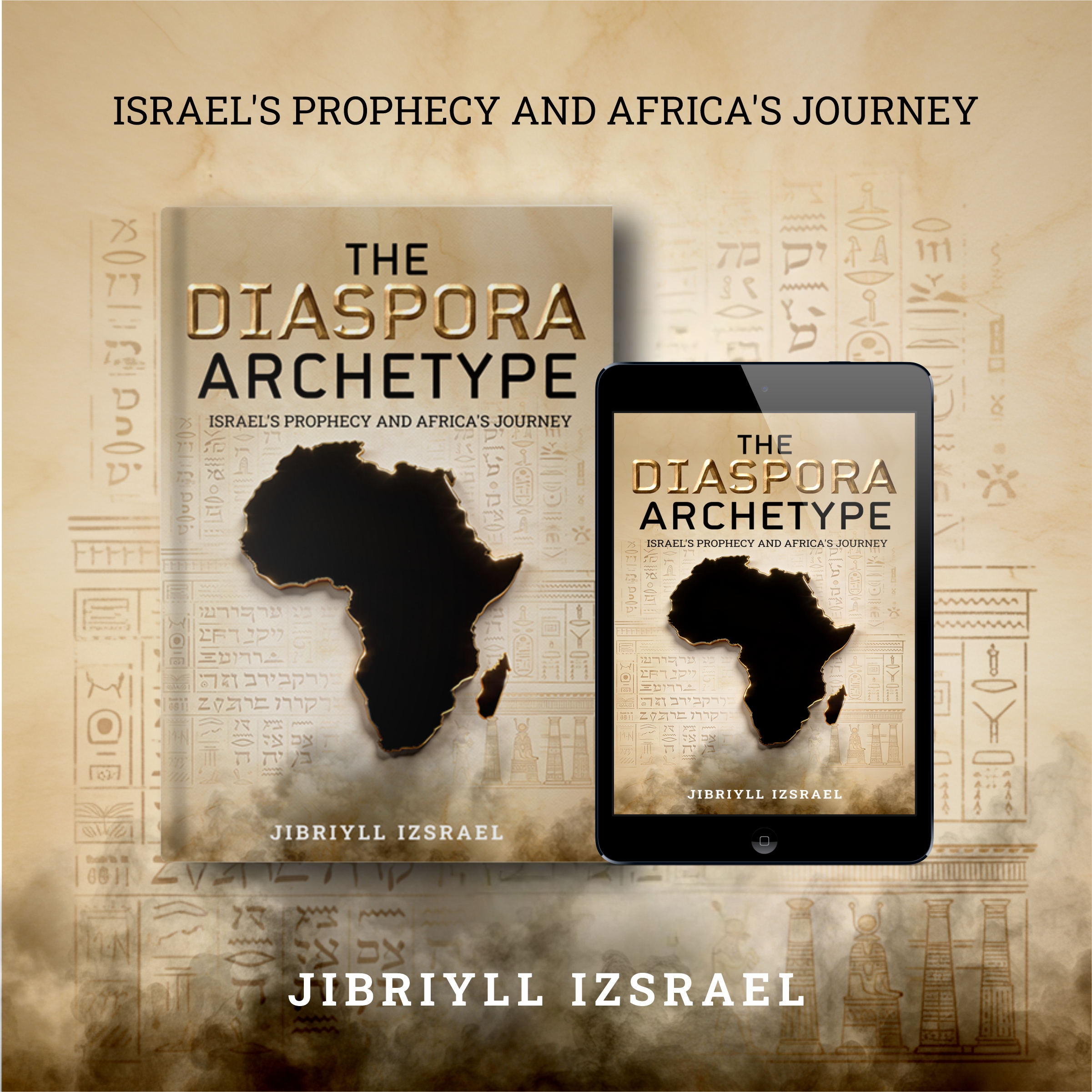
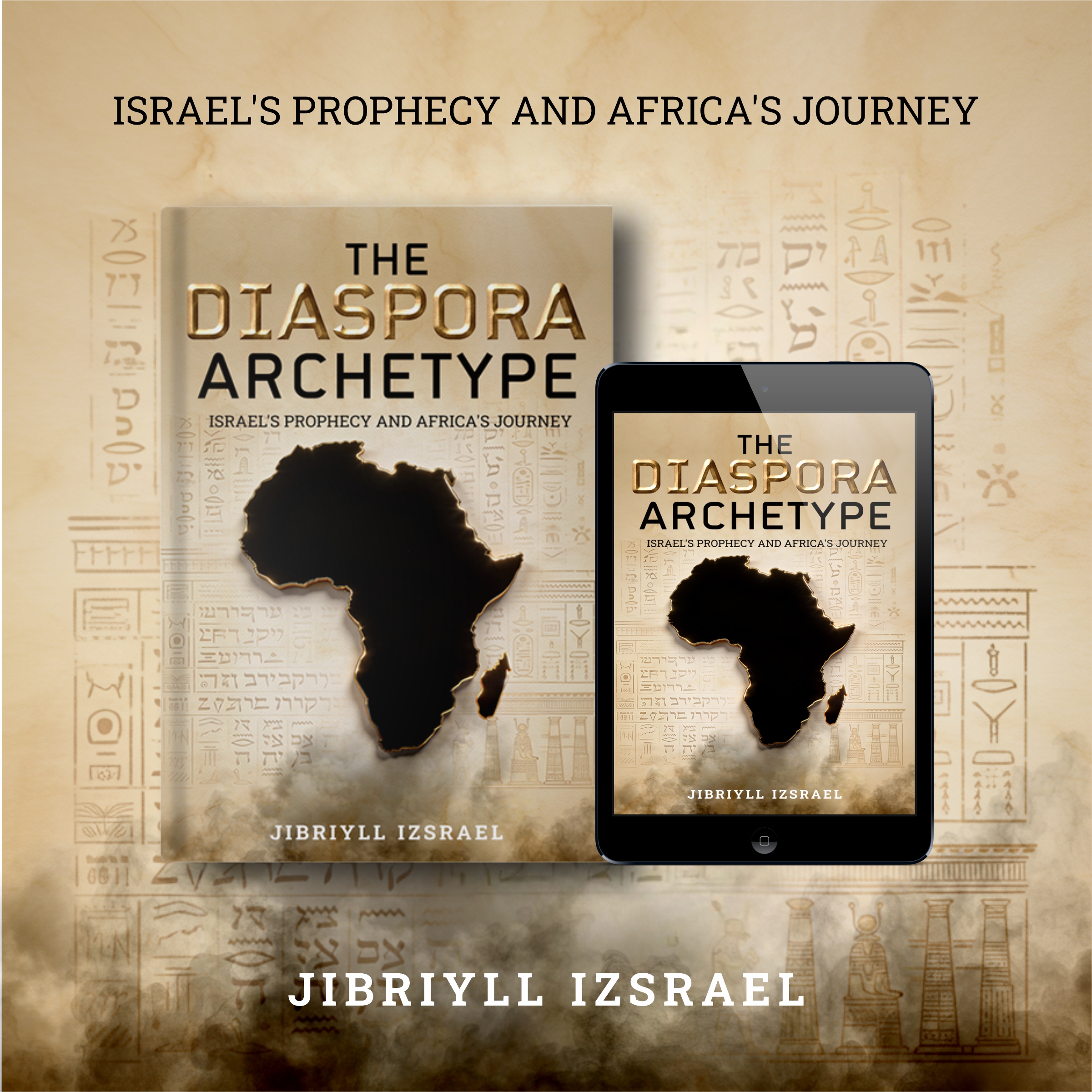
The Diaspora Archetype: Israel's Prophesy and Africa's Journey-Chapter 22
-
 By Jibriyll Izsrael
- 2026-03-17
Reclaiming Zion — Sovereignty as Spiritual Fulfillment
The Diaspora Archetype-Chapter 9
“They shall build the old wastes, they shall raise up the former desolations.”
— Isaiah 61:4
Zion as Moral Principle
In the long history of exile and return, Zion has meant more than a location.
It is a moral geometry—
a way of arranging life so that justice, beauty, and collective purpose occupy the center.
Ancient Jerusalem functioned as a symbolic equilibrium between worship and governance.
In modern idiom, Zion describes a society whose institutions mirror its highest values.
For the African world at large, reclaiming Zion therefore entails:
Cultural redesign.
Spiritual renewal.
Economic reconstruction.
It is the conscious construction of civic orders that embody the ethics distilled from diaspora experience:
Self-reliance.
Reciprocity.
Creativity.
Care.
The practical expression of this redesign is what contemporary planners and economists would call:
A prototype city of moral economy—
a place where values are not merely proclaimed,
but spatially enforced.
From Spiritual Longing to Urban Planning
The twentieth century’s independence movements secured political sovereignty.
The twenty-first must secure civilizational sovereignty—
the capacity to design and manage the infrastructures of freedom.
Around the world, special economic zones, smart-city initiatives, and cooperative industrial corridors illustrate how nations attempt to translate ideals into spatial systems.
The African diaspora, long a generator of global wealth yet marginal to global planning authority,
now turns to these instruments—
in its own voice.
This translation from symbolism to urbanism is not unprecedented.
What distinguishes The New Jerusalem Project, proposed within the Sovereign Wealth framework,
is its insistence that technology and spirituality are not opposing forces—
but complementary disciplines.
Concept Overview — The New Jerusalem Project
Definition
The New Jerusalem Project is envisioned as a Pan-Diaspora Renaissance City:
A self-sustaining urban region designed to model economic cooperation, ecological harmony, and cultural restoration.
It seeks to consolidate dispersed African-descended expertise into a single demonstrative ecosystem—
Part research park.
Part cooperative capital engine.
Part cultural sanctuary.
Objective
To establish a functioning prototype of sovereign interdependence—
an environment in which housing, production, education, and governance operate according to principles of:
Social equity.
Democratic participation.
Environmental stewardship.
Research and Precedents
Urban-development scholarship identifies three streams directly relevant to The New Jerusalem Project:
Eco-City and Circular-Economy Design
Projects such as Masdar City (UAE) and Rwanda’s Green City Kigali demonstrate how renewable energy, water stewardship, and closed-loop waste systems can underpin new settlements.
Charter-City Governance
Experimental jurisdictions—from Shenzhen to Próspera—illustrate how tailored legal frameworks can attract diaspora investment while safeguarding social rights.
Cultural Urbanism
The embedding of identity in architecture, as seen in Senegal’s Museum of Black Civilizations and Ghana’s Year of Return initiative, provides a template for integrating heritage into modern form.
Synthesizing these models, The New Jerusalem Project positions itself at the intersection of:
Sustainability.
Autonomy.
Ancestral continuity.
Core Design Principles
Together, the following principles translate Zion from abstraction into spatial ethics—
Law written not on stone, but on city plan:
Urban Morphology
Walkable, mixed-use clusters organized around cooperative courtyards, gardens, and learning hubs.
Economy
Collective ownership supported by diaspora investment through a publicly audited sovereign wealth fund financing housing, transit, and enterprise.
Energy & Ecology
Regenerative infrastructure including:
Solar-hydrogen microgrids.
Rain-harvesting systems.
Circular-waste economies.
Culture & Education
Knowledge treated as inheritance through a Pan-Diaspora University integrating:
Arts conservatories.
Technical institutes.
Living archives.
Governance
Participatory constitutionalism expressed through a bicameral council—
One civic.
One cultural.
Operating under radical transparency charters.
Economic Framework
Feasibility studies by African Development Bank economists and UN-Habitat planners emphasize that new-city projects succeed when revenue models integrate:
Land-value capture.
Diaspora bonds.
Export-service clusters.
The New Jerusalem Project adopts a four-pillar economy:
Green Industry Hub
Renewable-energy components and electric-mobility manufacturing.
Digital Commons
Data centers and fintech corridors governed by cooperative algorithms ensuring community equity shares.
Agritech and Food-Sovereignty Zone
Smart irrigation, heritage crops, and regional food security.
Cultural Economy District
Film, fashion, design, and performance generating global creative capital.
Projected employment follows a 60 / 30 / 10 model:
60% resident citizens
30% regional partners
10% international collaborators
This maintains openness—
while centering local agency.
Governance and Law
Governance research recommends hybrid models balancing:
Municipal autonomy
with
constitutional oversight.
The Project’s draft charter proposes:
A Civic Assembly elected by residents and diaspora stakeholders.
An Ethics Council of educators, scientists, and elders reviewing legislation for cultural consonance.
A Development Authority accountable to both bodies through blockchain-based budgeting for financial transparency.
This tri-institutional structure echoes the ancient balance of:
Priest.
Prophet.
King.
Translated into modern administrative checks.
Social Infrastructure and Human Development
Urban success depends as much on social design as on engineering.
Accordingly, The New Jerusalem Project prioritizes human infrastructure:
Universal broadband as a civil right.
Cooperative housing trusts to prevent speculation.
Integrated health systems combining modern medicine with African holistic practices.
Cultural mentorship linking elders and youth through apprenticeship.
Prosperity is anchored not in extraction—
but in human flourishing.
Strategic Partnerships and Implementation Phasing
Implementation unfolds across three fifteen-year phases:
Foundational Phase (Years 1–5)
Land acquisition.
Charter ratification.
Diaspora-bond issuance.
Core infrastructure grid.
Institutional Phase (Years 6–10)
University.
Innovation zones.
Housing cooperatives.
Population ? 150,000.
Integrative Phase (Years 11–15)
Regional trade integration.
Full renewable-energy autonomy.
Population ? 500,000.
Replication toolkit for satellite cities.
Strategic partners include:
African Union Smart Cities Program.
ECOWAS Infrastructure Fund.
Global universities through knowledge-transfer agreements.
Zion Reimagined
The New Jerusalem Project completes the long arc from spiritual promise to civilizational planning.
Zion is no longer nostalgia.
It is design hypothesis—
That justice can be engineered.
That culture can guide technology.
That the lessons of exile can shape sustainable citizenship.
Where the ancient city sought proximity to the divine,
the modern city seeks fidelity to principle.
Streets, energy systems, and schools become instruments of remembrance.
Sovereignty learns to coexist with service—
and prosperity with peace.
Conclusion — The Blueprint and the Burden
Reclaiming Zion does not end history.
It inaugurates responsibility.
The power to design one’s own city carries the obligation to harmonize:
Freedom with order.
Innovation with equity.
The New Jerusalem Project stands as a test case—
an experiment in translating cultural memory into measurable policy.
If successful, it will demonstrate that humanity’s oldest dream of sacred community can survive translation into:
Steel.
Glass.
Data.
It will not replace faith.
It will infrastructure it.
Support the Work
If this chapter resonated with you, consider supporting the African American Union.
Your support helps expand education, economic cooperation, and cultural development within our community.• Become a member
• Support the Union store
• Share this chapter
• Make a contribution
All net proceeds from the Sovereign Trilogy are dedicated to helping seed the African American Sovereign Wealth Fund, an initiative of the African American Union designed to strengthen economic cooperation and institution-building for future generations.
By supporting this work, readers help transform ideas into lasting infrastructure for our community.